a
Creative Fox Marketing Group Logo
Facebook Is Limiting Website Links. What Does This Mean for Your Business?

Facebook Is Limiting Website Links. What Does This Mean for Your Business?

You're a business owner and you've just created the perfect Facebook post for your business page. You've got a great photo, engaging content, and a link directing customers to your website. You hit publish, expecting to reach potential customers. Now imagine Facebook telling you that you've reached your monthly limit for sharing website links. That's becoming a reality for some businesses.

Meta, the parent company of Facebook and Instagram, has placed restrictions that limit certain business Pages and professional accounts to just two organic posts with external links per month, unless they subscribe to a qualifying paid service.

In September 2026, Meta also introduced Meta One, a new subscription service that offers businesses additional tools, including expanded link-sharing capabilities. So, does this mean businesses need to start paying Facebook just to direct customers to their websites? Not necessarily. But it does mean it's time to rethink how we use social media for business.

Why Is Facebook Restricting Website Links?

Short answer: Facebook wants users to stay on Facebook.

When someone clicks a link to visit your website, read your blog, schedule an appointment, or shop your online store, they're leaving Meta's platform. For years, Facebook has favored content that keeps people engaged, such as photos, videos, Reels, and posts that encourage conversations.

Meta is testing whether businesses will pay for the ability to share more external links.

The restrictions began as a limited test in December 2025 and have since reached additional business accounts. However, not every Facebook Page is currently affected.

For businesses included in the test, external links to websites, blogs, online stores, booking pages, and other non-Meta destinations may count toward the monthly limit.

Even placing a link in the comments may not get around the restriction.

It's another change that could affect how businesses connect their social media followers with their websites.

What Is Meta One, and What Does It Cost?

Meta One launched in September 2026 with several subscription options for businesses and creators.

The monthly business subscription prices on Meta One as of October 2026 are between $14.99/ month - $499.00/month. Features and availability vary by account and platform.

For a small business, however, $49.99 per month adds up to nearly $600 per year. That's a significant expense just to share more links, especially if your posts aren't consistently generating website visitors, leads, or sales.

Before adding another subscription to your marketing budget, it's worth asking whether there's a better way to reach your customers.

What Can Businesses Do Instead?

Facebook is still a valuable marketing tool. These changes simply make it more important to have a strategy behind what you're posting.

Here are five ways businesses can adjust.

Give People a Reason to Stop Scrolling

Share a helpful tip, answer a common customer question, showcase a recent project, or introduce the people behind your business.

The post provides value without requiring someone to click a link.

Use More Original Photos and Videos

Original content gives potential customers a better understanding of your business and helps build trust.

Show your team at work, highlight products, share customer experiences, or create short videos answering frequently asked questions.

Make Every Website Link Count

If your Facebook Page is limited to two external link posts per month, choose those opportunities carefully.

Use them for important promotions, new services, special events, or information that customers need to access directly on your website.

You Must Invest in Your Website and SEO

Here's something we regularly remind you of:

Your Facebook Page is not a replacement for your business website.

You don't control Facebook's algorithms, policies, or subscription requirements. A change in any of those can affect how many people see your content.

Don't Put All Your Marketing Into One Platform

Email marketing, SEO, digital advertising, and a well-maintained website all provide additional opportunities to reach customers.

If Facebook changes its rules tomorrow, you should still have ways for customers to find and contact your business.

Is Facebook Still Worth It for Small Businesses?

Absolutely!

Facebook continues to be a useful platform for building relationships, promoting local businesses, and connecting with customers. People still visit Facebook to find recommendations, check business reviews, discover local events, and keep up with businesses they follow.

Facebook advertising also offers opportunities to reach specific audiences and generate leads, even when organic link-sharing opportunities are limited. But there's an important distinction between using Facebook as a marketing tool and depending on it for your entire online presence.

The goal shouldn't just be getting likes and followers. It should be turning that attention into real opportunities for your business.

Should You Pay for Meta One?

For some businesses, the additional tools and link-sharing capabilities may justify the monthly expense. For others, that money could be better spent improving their website, developing stronger content, investing in SEO, or running targeted advertisements.

Before subscribing, look at your current social media results.

Are people visiting your website from Facebook? Are they contacting you or making purchases? Are your posts helping you reach your business goals? If the answer is no, paying for additional links probably won't solve the underlying problem.

Your Business Needs More Than a Facebook Page

Facebook's latest changes reinforce something we've believed at Creative Fox Group for a long time: businesses need an online presence that extends beyond social media. You can read more about that on this in a previous blog post.

Social media platforms are constantly evolving. What works today may not work six months from now.

That doesn't mean you should stop using Facebook. It means your website, SEO, social media, and digital advertising should work together instead of depending on one platform to do everything.

At Creative Fox Group, we help businesses strengthen their online presence through professional website design, search engine optimization, social media management, and digital marketing.

Because your business deserves a marketing strategy that can adapt when the rules change.

Is your business relying too heavily on Facebook? Contact Creative Fox Group to learn how we can help you build a stronger digital presence.
Are AI-Generated Graphics Making Your Business Look Cringey?

Are AI-Generated Graphics Making Your Business Look Cringey?

We’re just going to say it: AI posters are cringey.

We’ve probably already offended a few people, but that’s okay. Sometimes you need to hear the facts, even when they sting a little. There are plenty of reasons an obviously AI-generated graphic can hurt your marketing, but let’s break down a few of the biggest ones.

Let’s Keep It 100

AI tools don’t truly know your brand.

They don’t understand your business, your customers, your personality, or what makes you different from the competition. You can type in a prompt with your sale dates, times, locations, products, and pricing, but the AI is still making design decisions based on patterns rather than an actual understanding of your brand.

AI generated graphic for a restaurant made by Gemini

That can lead to graphics that feel generic. The fonts, effects, layouts, dramatic shading, and overall style can start looking suspiciously similar to every other AI-generated ad in your feed.

In today’s teenager vernacular, it’s mid.

It may technically get the information across, but it doesn’t give people much reason to remember your business.

How many AI generated images have you seen similar to this restaurants? If you're in the food industry, you should show the real food product you're trying to sell, not AI images. Customer want to see what you're wanting them to buy

Its TMI

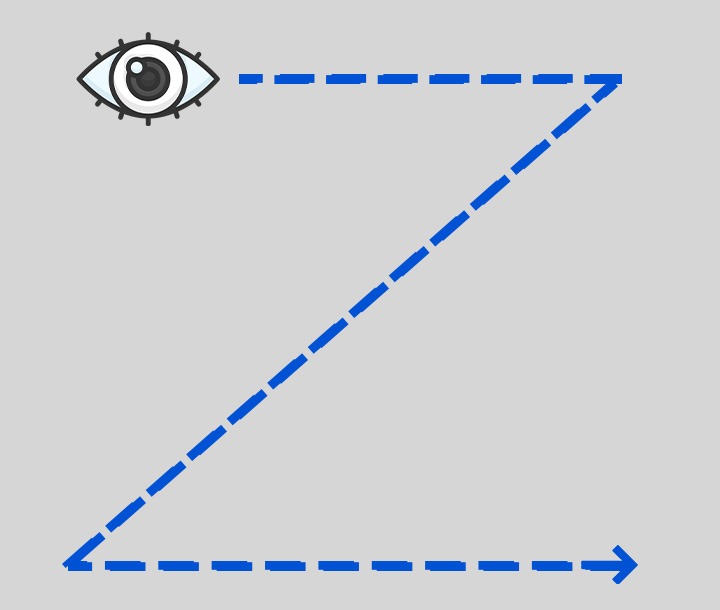
Go back to the basics. Why are you creating the announcement in the first place? Your eyes shouldn’t have to go on a scavenger hunt to figure out what an ad is trying to tell you. Your eyes follow a Z-Pattern. It's important to keep the information you're trying to share in a natural rythem instead of going on a quest.

You want to capture someone’s attention quickly, communicate the most important information, and give them a reason to take the next step. That next step may be visiting your website or calling to get more interest.

Think of it like speed dating. You have a very limited amount of time to make an impression. You don’t need to tell them your entire life story in the first 30 seconds. The same applies to marketing.

Your social media graphic might simply tell someone that your sale is happening, highlight the biggest offer, and direct them to your website for the details. That is part of the marketing funnel. First, you create awareness. Then, you give people somewhere to learn more. When it comes to a graphic or flyer, less really is more.

Your eyes look for a z formation when scanning on a website

You’re Blue (Da Ba Dee)

Happy alien seeing everything in blue including a blue house, blue car, and blue window

People are doom scrolling through social media at lightning speed.

If you live in a blue house with a blue window, wear blue clothes, and everything around you is blue... everything starts looking the same. Once they start recognizing the same AI aesthetic over and over again, another similar graphic can quickly become visual background noise.

It’s giving... scroll right past it. Your marketing needs to interrupt the pattern, not blend into it.

But hey, look at the bright side. The prompt that was sent into AI to generate the graphic only took three to five minutes from start to finish. Unfortunately, your customer may spend even less time looking at it.

Graphic Artists Are Becoming Few and Far Between

Here’s another side of the conversation that businesses should consider.

You want real people to walk into your business, hire your company, purchase your products, attend your events, and support what you do.

Those customers are human.

So are the photographers, writers, designers, marketers, printers, videographers, and other creative professionals who support businesses in your community. While we were creating this blog, Bill Gates published an essay expressing his concerns about jobs being lost due to AI. It is a real concern to consider.

AI can absolutely be a useful tool, but when businesses begin replacing every creative task with automated content simply because it is faster or cheaper, eventually there are fewer skilled people left doing that work.

And when you actually need someone who understands branding, strategy, typography, layout, customer behavior, or how to make your business stand out, you may discover that those professionals have moved on to something else.

Then we’re all stuck living in that blue world.

Use AI for Ideas, Not Your Identity

AI can be incredibly useful when it is used responsibly. Use it to brainstorm ideas. Bounce concepts around. Ask questions. Explore headlines. Work through different directions.

But the human should still have the final say.

Your marketing should reflect your business, your customers, and your personality. AI should support the creative process, not become the creative process.Iif your competitors have access to the same tools, the same prompts, and the same shortcuts, simply using AI isn’t what makes your business stand out.

What makes your business stand out? Your ideas do. Your strategy does. Your brand does.

If you want a consistent brand identity, reach out to us and we'll be glad to partner with you!

Will Using AI Affect How Customers View My Business?

Will Using AI Affect How Customers View My Business?

Recently, we saw a business use an obviously AI-generated graphic to promote a summer sale on social media. One person commented that they did not trust businesses that used AI in their marketing. The business responded by explaining why they chose to use AI. Their reasoning was that they would rather invest their budget in hiring people to make physical improvements to their store and create a better customer experience than spend money on a promotional graphic that would only be used for a couple of months.

The community, however, did not respond well to that explanation.


Many of the comments that followed were strongly against the use of AI-generated marketing. While people agreed that investing in the customer experience was important, their concerns about the use of AI outweighed that point. Several people expressed that they were less likely to support businesses that relied heavily on AI for their marketing because the content felt less authentic and did not clearly communicate what made the business unique.

The community, however, did not respond well to that explanation.

This highlights one of the biggest problems with relying on AI as the primary source for your marketing graphics. When businesses use similar AI tools, prompts, styles, and templates, their advertising can begin to look the same. Instead of helping your business stand out, your marketing can start to blend in.

Why Did This Business Receive So Much Backlash?

Why did this particular business receive such a strong reaction when other businesses use AI without receiving the same response?

Part of the issue may have been a disconnect between the business and its audience. The company may not have fully understood how strongly its customers and followers valued originality, authenticity, and human-created content. This communitiy reaction should put other businesses on notice.

Disney's Toy Story with Woody and Buzz Lightyear

As business owners, we understand that every company has a budget. Marketing expenses have to make financial sense, and no business wants to spend beyond its means. We also do not believe this business intended to mislead its customers or negatively affect their brand.

The problem was not simply that AI was used. The problem was that the marketing did not connect with the audience in the way the business expected. That is where understanding your customers becomes so important.

Your Marketing Should Look Like Your Business

There are businesses and independent designers who specialize in creating professional marketing materials without requiring companies to build an entire in-house creative department. Just as bloggers and content creators hire graphic designers to create YouTube thumbnails, businesses can work with designers to create social media graphics, advertisements, promotional materials, and other branded content.

AI can be a useful tool for brainstorming, research, organization, and improving efficiency. However, relying on it to replace the creative process can result in marketing that feels generic or disconnected from your brand.

Your customers should be able to look at your marketing and recognize your business, not simply recognize that an AI tool created it.

More Than a Prompt

At Creative Fox Group, we believe marketing should be intentionally created around the business it represents.

Your marketing should give people a reason to remember your business and what services it offers.

Your business should not disappear into a sea of companies using the same styles, the same ideas, and the same automated content.

We do not rely on AI-generated artwork to create graphics for our company or our clients' products and services. Instead, we focus on creating marketing materials that reflect each client's brand, message, audience, and goals.

We understand that consumers are becoming increasingly aware of AI-generated content. That makes thoughtful, original creative work even more important and necessary to make your business stand out in a crowded space.

Let's Connect

Need help creating professional graphics for your business?

Fill out our contact form and tell us a little about your company. Creative Fox Group would be happy to learn more about your business and help you create marketing materials designed specifically for your brand!

Use AI Responsibly – You’ve Been Warned

Use AI Responsibly – You’ve Been Warned

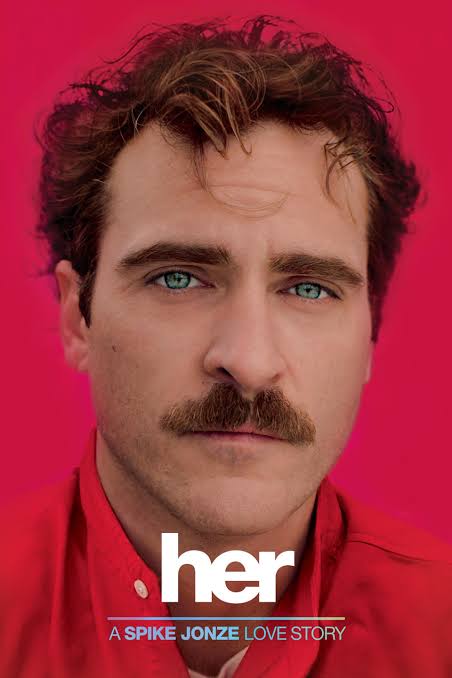
Remember the 2013 Joaquin Phoenix movie Her, in which his character falls in love with an artificial intelligence operating system represented by a female voice? At the time, the concept sounded ridiculous. Today, it feels less like science fiction.

Artificial intelligence has moved far beyond voice assistants. It now creates written content, images, videos, advertisements, search results, and even business plans. AI has become an everyday sight on social media, television commercials, and throughout our personal and professional lives. Remember when everyone said, “Google it,” whenever someone had a question? Now, how often do you hear someone say, “Ask Chat,” “Hey, Alexa,” or “Grok, explain this”?

Why are we giving AI so much power over what we think, see, and do? Are we becoming too dependent on it? Can we still think for ourselves, or have we simply accepted that AI is now part of everyday life?

There is an old saying: “Work smarter, not harder.” The danger is that AI can tempt us to remove the word “work” from that statement entirely. You feed it information, and it produces something, even when the result is inaccurate, generic, or makes absolutely no sense. Making something sound human is not the same as creating it with human judgment, experience, and understanding.

On some level, I believe we are all a little nervous about AI. However, this is not an argument against using it. This is a warning about using it carelessly, especially when representing a business. So, let’s look at the marketing side of this, widely known as AI Slop.

AI Slop

You see it everywhere. AI slop is low-effort, AI-generated content that is published without enough human thought, review, or purpose. It does not even try to hide anymore. Scroll through social media for a few minutes, and you will probably find strangely polished people, unrealistic products, distorted backgrounds, extra fingers, or captions that sound like every other caption online.

Facebook and Instagram use “AI info” labels to help users identify certain content that was generated or significantly edited with AI. There is something slightly comical about one company’s AI helping humans recognize content produced by another AI program. However. it becomes less amusing when businesses use artificial images to represent real products.

A restaurant showing a menu item should never ask AI to generate an image of a food product they make and share that image rather than photograph their actual product and advertise it. Customers want to see what they will actually receive. That AI may save a little time or money, but it creates a serious breach of trust. I have seen people say they will not trust a restaurant that uses AI-generated images to advertise its food. I cannot blame them. When customers recognize that an image is artificial, they immediately begin asking questions. What is the restaurant hiding? Does the food actually look like that? Is that even a real menu item?

Customers do not want an imaginary version of your product. They want to see what they are actually being asked to purchase.

AI Saves Businesses Money... Sort of...

Most popular AI tools offer free tiers, with premium upgrades costing about $20 a month. But as a business owner, you have to weigh the true cost of using AI to represent your brand. The subscription price is not the true cost of AI. The real cost appears when careless AI content damages the trust customers have in your business.

You could serve the tastiest hamburger in town and make it look completely fake with an AI-generated advertisement. You could build beautiful furniture and then promote it with an image of a six-fingered person sitting comfortably in one of your chairs. People are already surrounded by gossip, misinformation, fake news, exaggerated promises, and aggressive sales tactics. They are tired of wondering what is real. They want honesty. That inexpensive AI subscription can become very expensive when customers stop trusting your company. It can cost you clicks, phone calls, store visits, referrals, repeat customers, and most importantly sales. Saving money on content does not help when the content makes your business look untrustworthy.

What Responsible AI Use Should Look Like

When used responsibly, AI can help keep your business organized and moving toward its goals. The key is making sure that the human remains in control.

1. Begin With Your Own Idea. Start with a human idea, goal, or problem. Then ask AI to suggest different ways you might accomplish it. Do not begin by copying and pasting a popular prompt you found online and expecting it to create something unique. When everyone uses the same prompts, everyone’s images, captions, and advertisements begin to look the same. You know the look I am talking about. Your business needs to sound and look like your business, not like every other company using the same AI formula.

2. Use AI as a tool to bounce ideas off of.  Use AI as a tool for exploring ideas, not as the source of your company’s purpose or strategy.  AI can help you organize a plan, question an idea, identify possibilities, or suggest improvements. It should not be allowed to make unchecked decisions about your weekly, monthly, or quarterly business priorities. AI does not understand your customers, employees, reputation, history, or long-term goals the way you do. It can assist with planning. It should never replace your judgment.

3. Use AI as an Extra Pair of Eyes. Write your emails, announcements, and important messages in your own words first. Afterward, you can paste the content into an AI tool and ask it to check the clarity, flow, grammar, or tone. This can be helpful when you are trying to make a message cleaner or easier to understand. Just because AI suggests a change does not mean the change is right. Read the revised message carefully. Make sure it still sounds like you, communicates the correct information, and fits the relationship you have with your cusomers in mind who are receiving it.

4. Compare More Than One AI Source. Do not assume the first AI tool you use is always accurate or objective. Different AI's can produce different answers, recommendations, and creative results. Compare responses when the information matters, and only use suggestions that genuinely fit your business, your audience, and your voice. Mixing and matching ideas from several AI tools can be useful, but the final decision must still come from a human.

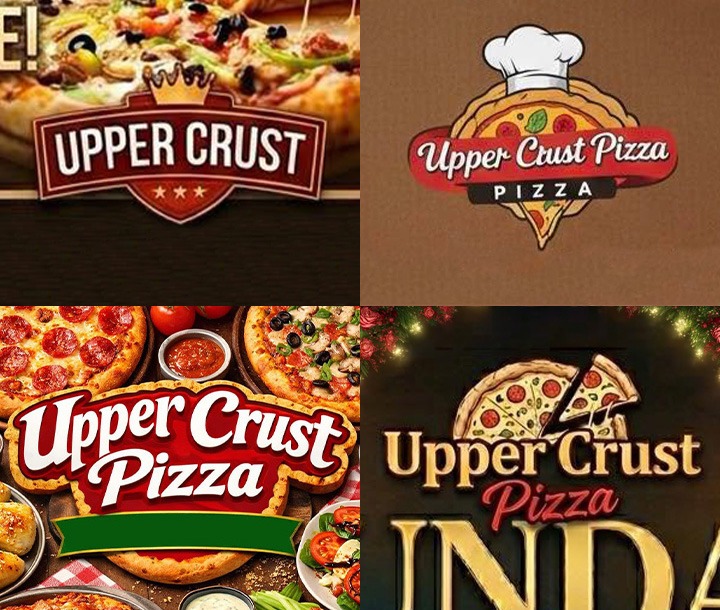
5. Do Not Use AI to Create Your Final Logo. AI can help generate early concepts or mood-board ideas, but it should not create the final logo your company depends on. An AI-generated image is not the same as a complete brand identity. Generated designs may change each time they are recreated, contain small inconsistencies, or fail to provide the clean, editable vector files needed for signs, clothing, printed materials, mailing graphics, and websites. There may also be important questions about ownership and copyright protection when a design is produced primarily by artificial intelligence rather than human authorship. Your logo should be intentionally designed, consistently reproduced, and flexible enough to work everywhere your brand appears.
AI-generated logos for a pizza business. This image shows inconsistency in how AI doesn't use the same logo design for the any business

Using this image above, you cannot be for sure this is the same business based by this business logo. But believe me when I tell you that this is the same business using AI to create marketing materials. This example isn't meant to speak negative of the business, but hopefully in the near future they can correct the inconsistency.

Remember: You Are Responsible for Your Business

At the end of the day, you are responsible for the growth, reputation, and success of your business. Using AI is a little like joining a health or weight-loss program. The program can recommend what to eat and how to exercise, but you are still responsible for what you consume and what you do. 


Business is no different.

AI can advise you, organize information, improve a sentence, suggest an idea, or generate an image. What it cannot do is accept responsibility for the consequences. When AI produces something inaccurate, misleading, inappropriate, or damaging, your customers will not hold the AI platform responsible. They will hold your business responsible. AI even says this in their results it provides you.

Use AI. Learn from it. Allow it to make certain parts of your work more efficient. But never hand over your judgment, integrity, or responsibility.

You have been warned.