a
Creative Fox Marketing Group Logo
Creative Fox Group logo in white for dark backgrounds
How to Get a Part 107 Unmanned Aircraft License and Pass the FAA Drone Exam

How to Get a Part 107 Unmanned Aircraft License and Pass the FAA Drone Exam

As part of our digital marketing services, one of our responsibilities is capturing high-quality photographs of client projects for their portfolios. We normally use a DSLR to shoot from multiple angles, but we realized something was missing. A view from the sky would add a new dimension and make the images more appealing.

That’s when we decided to invest in a drone. Offering unique aerial shots not only elevates our photography but also shows clients that we’re always looking for ways to improve their brand, even if it goes beyond the original scope of work.

Understanding the FAA Part 107 License

Once we made the decision, we researched the rules for flying a drone as a business. The Federal Aviation Administration (FAA) requires anyone flying commercially to have a Title 14 Code of Federal Regulations Part 107 Remote Pilot Certificate, commonly called a Part 107 license.

To obtain this certification, you must pay a $175 testing fee. The fee applies whether you pass or fail, and retakes cost the same — similar to taking the SAT or ACT. I wanted to make sure I was prepared, so I started by watching free YouTube videos. While some were helpful, most were dry and difficult to stay focused on

“If you have a small drone that is less than 55 pounds, you can fly for work or business by following the Part 107 guidelines.”

Choosing the Right Training Course

I continued searching for better study options and came across several paid online training courses, ranging from $60 to $350. Many offered a guarantee that if you failed the exam, they would pay for you to retake it. That gave me peace of mind, knowing these programs had to be competitive if they were willing to put money on the line.

After comparing options, I chose Drone Pilot Ground School. Their free demo course was clear and easy to understand, and they offer lifetime access in case FAA regulations change. Positive reviews from other students also influenced my decision. I’ve made a blog about Do Customer Reviews Matter, so I encourage you to leave them if you do not!

The course itself took about 20 hours to complete. I spent 2½ weeks working through the material and another week taking practice exams. In total, the process took four weeks from start of the course to exam day at an official testing center.

Drone course completion certificate from Drone Pilot Ground School

Passing the Exam and Moving Forward

I’m excited to share that I passed the exam on my first attempt! Now, Creative Fox Group can offer drone photography and videography as part of our marketing service package.

With a drone, we can capture client projects from above, create engaging reels for social media, and highlight services in ways that truly stand out. Our goal has always been to keep improving the quality of care we provide to our clients. Adding drone capabilities is another way we deliver on that promise.

Thank you for reading this weeks blog! If you’re not following us on social media, then please consider!

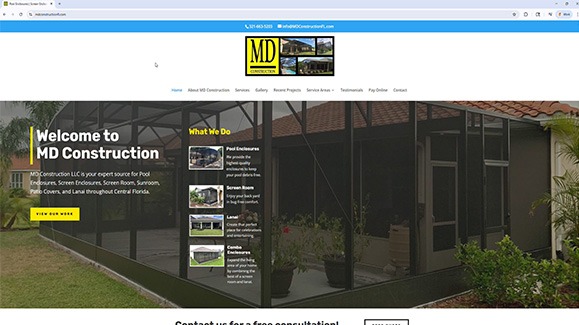
Website Redesign Client Case Study: MD Construction

Website Redesign Client Case Study: MD Construction

Client and the Opportunity

Our client, MD Construction, based in Central Florida, is dedicated to helping homeowners enhance their outdoor living spaces with quality and care. They wanted a website that clearly communicates their range of services and showcases the craftsmanship behind each project. The goal was to create a welcoming online presence that builds trust, highlights their local expertise, and encourages homeowners to take the next step toward improving their home’s comfort and value.

The old Website

Poor User Experience and Navigation – The site structure lacked intuitive navigation, making it difficult for users to find key information quickly.
Disorganized Content Layout – Content lacked hierarchy and structure, making it harder for visitors to understand services or take action.

Lack of SEO Optimization – The site was missing fundamental SEO elements, which impacted its visibility in local search results.

Unoptimized Image Assets – Oversized and improperly compressed photos were slowing down page load times, negatively affecting user experience and site performance.

View the video of the old website

Mobile Responsiveness Issues – The previous site did not adapt well to mobile devices, which is critical given the high volume of users browsing on phones and tablets.

No Internal Linking Strategy – Pages were isolated, with few cross-links to guide users through the site or support SEO efforts.

Our Solution

Improved User Navigation – We completely restructured the site’s navigation with a clear, simplified menu and logical page grouping. This ensures that both new and returning visitors can easily explore services, view project galleries, and access contact forms without frustration or confusion.

Strategic Content Organization – We rebuilt each page with purpose. Services are now clearly defined, headers guide the reader through sections, and content is formatted to highlight key details. This not only improves the user experience but also helps guide visitors toward taking action, whether it’s requesting a quote or browsing project photos.

SEO-Optimized Framework – From backend to content, we implemented SEO best practices across the site. Every page includes optimized meta titles and descriptions, alt text for all images, and copy tailored with target keywords for MD Construction’s core services and service areas. This foundation helps the site rank better locally and attract qualified traffic.

Optimized Visual Assets – Large, uncompressed images were replaced with high-quality, web-optimized versions. We balanced image quality with performance using modern compression tools, helping to significantly reduce page load times while still showcasing MD Construction’s work in the best possible light.

Fully Responsive Design – The new website was designed mobile-first to ensure it functions flawlessly on smartphones and tablets. Layouts automatically adjust to screen size, and all content remains accessible and easy to navigate — a must-have in today’s mobile-heavy browsing habits.

Internal Linking Strategy – We introduced a smart internal linking system to create a better flow between related content. Service pages now link to relevant galleries, the quote form is accessible throughout the site, and footer navigation offers quick access to high-traffic areas. This not only supports user engagement but also strengthens SEO by keeping users on the site longer.

Check out their new website to see the full transformation and explore their latest work!

Website Redesign Client Case Study: Trinity Baptist Church Lakeland, FL

Website Redesign Client Case Study: Trinity Baptist Church Lakeland, FL

Client and the Opportunity

Our client, Trinity Baptist Church in Lakeland, FL, is actively involved in local community outreach. They wanted a website that reflects their heart for the community and shows that there’s a welcoming place where families can worship together in a safe, supportive environment. The goal was to extend an open invitation for others to visit, connect, and grow as part of their local church family.

The old Website

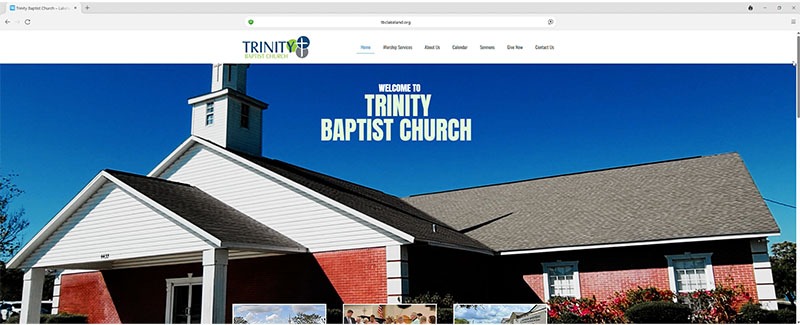
❌  Felt outdated and uninviting

❌  Lacked appeal and didn’t encourage people to engage with the website

❌  Did not represent the church’s community outreach

❌  Had limited photos and outdated photos

❌  Not mobile optimized and website felt clunky

❌  Website did not follow good SEO practices

Our Solution

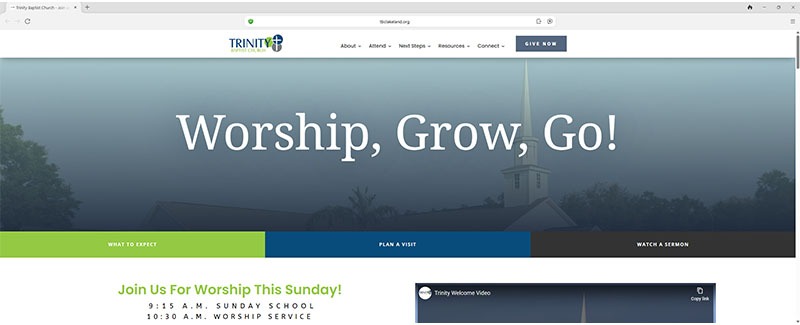
We upgraded to a professional website platform using a dynamic new theme. This gave us the flexibility to add powerful features like customizable contact forms through professional plug-ins. Since WordPress is regularly updated and offers a wide range of tools for SEO, websites built on this platform often perform better in search engine results

The mission statement of Trinity Baptist Church is to Worship, Grow, and Go! And they wanted to make that visible to everyone. We modernized their website giving them a proper menu bar and header. The visual appeal has the visitor wanting to engage with each page to learn more about Trinity Baptist Church

All of the community outreaches held at their church campus are now visible on their website.

✅ We added fresh, updated photos across the website to help visitors feel more connected to Trinity Baptist Church. These images highlight the campus, community outreach events, and give a clear picture of what someone can expect when visiting for the first time

This website has been optimized for mobile phone use, including a collapsible menu bar

✅ Every page on the website includes a meta description with keywords that people commonly use when searching for a local church. All photos also include alt text, making it easier for search engines to index them and improve the site’s overall visibility. The SEO score with the old website was 65% and after a month of being live and crawled by search engines, their website has an SEO score of 95%

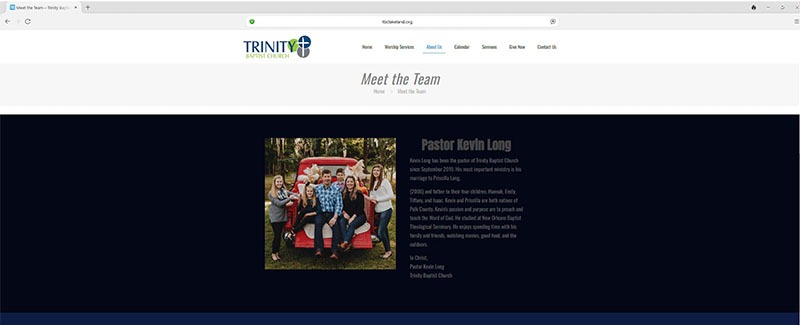
Church staff page

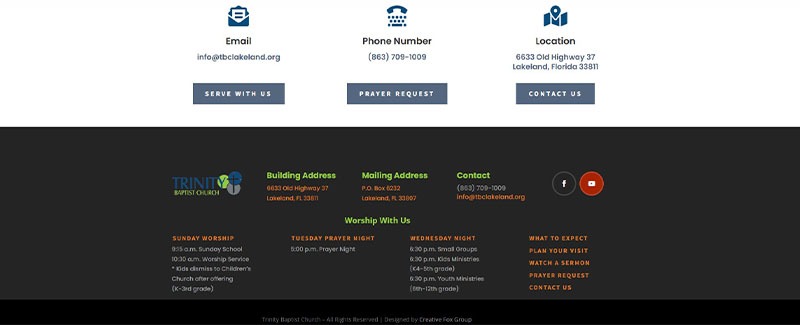
Church standard page footer

Marketing Opportunity After Kiss Cam Scandal at Concert

Marketing Opportunity After Kiss Cam Scandal at Concert

At a recent Coldplay concert at Gillette Stadium, what started as a fun kiss cam moment quickly turned into viral chaos. When the camera landed on Andy Byron, CEO of Astronomer, and Kristin Cabot, the company’s head of HR. The two quickly hid their faces in embarrassment hoping nobody would recognize them, but it was too late.  A person at the concert has recorded the TV screen at the venue and uploaded it onto TikTok. It wasn’t too long thereafter before the internet took notice. The clip exploded online, racking more than 90 million views on TikTok and sparking endless memes and speculation. The real-world consequences came fast: Byron was placed on leave and later resigned, while Cabot also came under internal review.  As the video gained traction, it didn’t take long for brands to spot a marketing opportunity after the kiss cam scandal at the concert, turning the awkward moment into a trending campaign tool.

It didn’t take long for brands to jump in and take advantage of what’s known as the “attention economy.” This is when businesses use a viral moment that everyone’s talking about to boost their visibility and show up in search and social feeds. Most of the time, it’s done with a witty or edgy comment that gets people saying, “Did you see what that brand posted?”

Ikea post about the coldplay concert kiss cam

IKEA Instagram

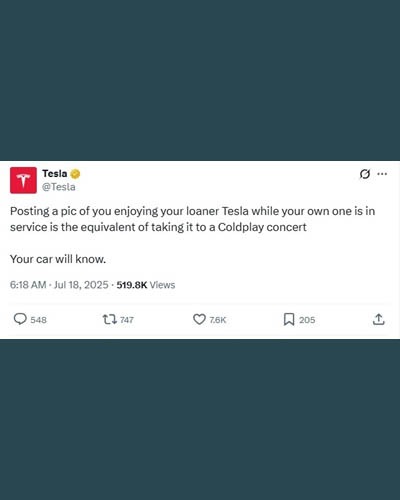
Tesla post about the coldplay concert kiss cam
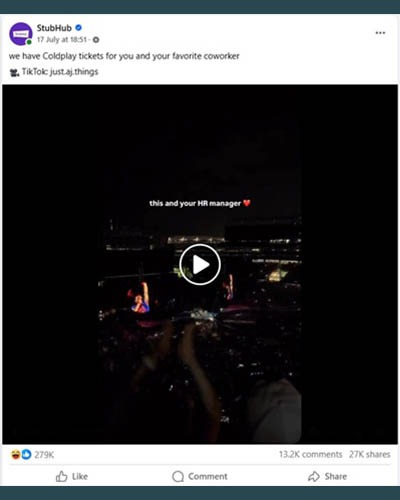
Stubhub post about the coldplay concert kiss cam

StubHub Facebook

Brands should be thoughtful about the types of viral moments they choose to engage with. As long as they steer clear of political or highly sensitive topics, the benefits often outweigh the risks. A clever response can lead to viral engagement, increased visibility, and stronger audience connection. Many millennials and even some baby boomers tend to appreciate the humor behind these timely posts. But not everyone feels the same way. Some viewers don’t see the moment as newsworthy, and quick-witted brands can come across as tone deaf, especially when real people are affected and the situation involves personal consequences like resignations and family fallout.

What Brands Can Learn

Act fast but thoughtfully
In the world of viral content, timing is everything. The brands that successfully leveraged the kiss cam scandal moved quickly, posting within hours while the moment was still fresh and buzzing online. That kind of speed is essential in today’s “meme-time” cycle, where trends come and go in a matter of days—or even hours. But fast doesn’t mean reckless. Before hitting publish, it’s important to pause and consider the context, the tone, and the potential reaction. A smart, well-timed post can boost visibility. A rushed, careless one can backfire.

Know your brand tone
Humor works when it’s playful, punny, or a little cheeky. But it needs to land well. Brands should avoid coming across as mean-spirited, exploitative, or overly personal. It’s a delicate balance. If your post feels like it’s making fun of real people in a painful situation, it could leave a bad impression. The best-performing posts are the ones that join the conversation without crossing the line.

Alight with your brand voice
Not every brand should sound the same. Tesla’s bold, edgy voice made their response feel natural and on-brand. IKEA leaned into its quirky and cozy image with a lighthearted visual. These brands know who they are, and their messaging reflects that. On the other hand, if a financial institution or healthcare company tried the same tone, it might come off as confusing or even inappropriate. Consistency is key. When your content feels true to your brand identity, it builds trust and connection.

Monitor Audience Response
Engagement is what brands want, but don’t forget to read the room. Track how your audience responds in real time. If your post gets laughs, likes, and shares, that’s a good sign. But if the tone shifts and people start expressing discomfort or empathy for those involved in the original incident, it’s time to reassess. A single post probably won’t define your brand, but how you respond to feedback will. Being willing to pivot or pull back shows that your brand listens and cares.

Takeaways From Attention Economy

These takeaways are a reminder that when done right, reactive marketing can be a powerful tool for brand growth and audience connection. It allows businesses to step into conversations their audiences are already having, creating moments that feel fresh, relevant, and human. When a brand reacts with the right timing, it shows they’re paying attention, not just to trends, but to the world around them.

Reactive marketing isn’t just about being first. It’s about being thoughtful. The most successful examples strike a careful balance between speed, tone, and authenticity. A well-crafted post can spark conversation, make people laugh, or even position a brand as culturally aware and in-touch. But if it feels forced, off-brand, or insensitive, it can just as easily damage credibility.

Ultimately, the goal isn’t just to go viral, it’s to connect. When brands understand their voice, respect their audience, and respond with intention, reactive marketing becomes more than just a moment. It becomes a meaningful part of their broader storytelling strategy.

Thank you for reading this weeks blog! This viral moment reminds me about the blog we wrote about Super Bowl Marketing. Every year brands push the envelope to grab viewers attention to make themselves viral. If you have not read it, check it out! Have a blessed week!

Why Your Website Should Focus on Specific Keywords

Why Your Website Should Focus on Specific Keywords

When it comes to getting your business found online, visibility is everything. But how do you make sure your website shows up when someone searches for what you offer? The answer starts with keywords, but not just any keywords, but specifically, the right keywords. Targeting specific keywords helps search engines understand your content, and more importantly, it helps the right people find your website at the right time.

What Are Keywords, and Why Do They Matter

Keywords are the words and phrases people type into search engines like Google. For example, if someone searches for “screen enclosures in Polk County,” and your website has content built around that phrase, you have a much better chance of showing up in their results.

keyword research written on a piece of paper next to apple earpods

Search engines use keywords to match user searches with relevant websites. If your content includes specific, targeted keywords, search engines are more likely to understand what your pages are about and recommend them to people.

Keyword Specificity

While it might seem like a good idea to try to rank for broad terms like “contractor” or “screen repair,” those phrases are highly competitive and often too general to bring in quality traffic. Focusing on more specific, long-tail keywords such as “custom pool enclosures in Lakeland” or “garage screen installation near me” gives your site a better shot at ranking and attracting visitors. There is a higher likelihood that those visitors are more likely to convert.

3 Reasons why specificity works

Less Competition

Niche keywords are easier to tank for because fewer websites are targeting the,.

Higher Intent

Visitors searching with specific terms usually know what they want and are closer to making a decision. As mentioned earlier, these lead to higher conversion rates.

Better User Experience

Tailored content that matches search intent makes it easier for users to find what they’re looking for. They won’t have to look anywhere else because you offer the product they are looking for.

SEO and Content Go Hand in Hand

Using specific keywords isn’t just about inserting the right words into your homepage. Your pages are about creating valuable, relevant content that naturally includes those keywords like blog posts, service pages, FAQs, and project descriptions. This not only helps with SEO but also builds trust and authority with your audience.

rear lanai in the back of a home

For example, if you offer lanai enclosures in Central Florida, a blog post titled “What to Know Before Building a Lanai in Florida” can target that exact audience while answering questions they’re already asking online. You’re not only improving your chances of ranking for searches like “building a lanai in Florida” or “lanai enclosure tips,” but you’re also positioning your business as a helpful, knowledgeable resource. When potential customers find useful content that speaks directly to their needs, they’re more likely to trust your expertise and contact you when they’re ready to move forward. Plus, content like this often gets shared or bookmarked, further increasing your visibility and authority over time.

Specific Keywords Matter

Your website is your digital storefront and search engines are the map people use to find it. By focusing on specific keywords, you help search engines guide more of the right people to your site. Whether you’re a small business, service provider, or creative brand, keyword strategy is a foundational part of a strong online presence. As we say around here, your future customer is already searching for you, lets make sure they will find you!

Thank you for reading this weeks blog post! We enjoy posting these every other week and hope you find them helpful. If you need help identifying the right keywords for your business, reach out to us and we would love to assist you!