a
Creative Fox Marketing Group Logo
Creative Fox Group logo in white for dark backgrounds
5 Marketing Lessons From Viral Scandals

5 Marketing Lessons From Viral Scandals

Marketing Beyond Campaigns

Marketing isn’t just ads, logos, or social media campaigns. In today’s always-online world, every action is marketing. A CEO’s behavior, a fan’s outburst, even how a company responds to a mistake, these moments shape brand perception more than polished campaigns ever could.

Recent viral scandals remind us that you are your brand. Here are 5 lessons every company can learn.

1. Leadership Is Marketing

The situation: In July 2025, Astronomer CEO Andy Byron was caught on a Coldplay concert’s jumbotron kissing his company’s Head of HR. A moment that might have been brushed off in private became a global headline. Within days, Byron resigned. For Astronomer, the fallout wasn’t just about losing a leader, it became a conversation about company culture, professionalism, and trust.

Lesson for all companies:

  • Leadership actions are never private. They represent the brand, whether in the boardroom or the stands.

  • When leaders stumble, years of marketing investments can be overshadowed in a single viral clip.

  • Companies must provide conduct training, hold leaders accountable, and prepare crisis-response plans so they can act swiftly when necessary.

You can also view our blog showing how companies used this embarrassing moment for their own marketing efforts. 

Kissing ceo from Coldplay concert.

2. Reputation Is Marketing

The situation: At the U.S. Open in August 2025, Polish businessman Piotr Szczerek, co-owner of paving-stone company Drogbruk, was filmed grabbing a signed tennis cap from a young boy named Brock. The internet exploded. Outrage wasn’t just directed at him, but at his company:

  • Drogbruk’s Trustpilot rating dropped to ~1.1 stars.

  • Google reviews sank to ~1.2 stars, with angry reviews pouring in from around the world.

  • News outlets tied Szczerek’s personal behavior directly to his business, effectively branding the company as greedy and arrogant.

His eventual apology was criticized as insincere, and his attempt to delete social media accounts only amplified the backlash. Read about the apology here.

CEO hat snatcher

Lesson for all companies:

  • Your online reputation is your marketing. Reviews, search results, and social mentions influence customers more than ad copy ever could.

  • A leader’s personal behavior can become the company’s defining story.

  • Monitor sentiment daily, respond transparently, and treat online reputation management like part of your marketing strategy.

Szczerek issued an apology and returned the hat, but the damage was done. What stood out even more was how the player, Kamil Majchrzak, stepped in to reunite with the boy and make the situation right, turning himself into the hero of the story.

3. Response Is Marketing

The situation: On September 5, 2025, during a Phillies–Marlins game, father Drew Feltwell retrieved a home run ball for his son Lincoln. Moments later, a woman, dubbed “Phillies Karen”, ran up, demanding the ball and insisting it was hers. The father, not wanting a confrontation, gave it to her. The clip went viral, leaving viewers outraged.

The real story, though, became about the response. The Marlins staff gifted Lincoln a swag bag, and Phillies player Harrison Bader surprised him with a signed bat. Their quick, empathetic actions reframed the story as one of kindness and fan appreciation, generating national headlines that cast the teams in a positive light.

Lesson for all companies:

  • Mistakes and conflicts are inevitable, but the response defines the brand.

  • Quick, empathetic, and visible gestures can flip negative press into free positive PR.

  • Cold or corporate responses fuel distrust, human ones build loyalty.

The Philly Karen.

4. Culture Is Marketing

In each of these viral stories, the root issue wasn’t just the moment itself, but what it implied about company culture:

  • At Astronomer, blurred boundaries between leadership and HR raised questions about fairness.

  • At Drogbruk, entitlement at the top sparked assumptions about arrogance baked into the brand.

  • In the Phillies game, fans appreciated that the Marlins and Bader stepped up to make it right.

Lesson for all companies:

  • Marketing promises must align with company culture. If you sell trust, fairness, or family values externally but fail to uphold them internally, the gap will be exposed.

  • Employees and leaders are brand ambassadors. Their actions, in public and private , signal your culture to the world.

  • Culture isn’t just HR policy, it’s a marketing asset.

5. Every Action Is Marketing

None of these moments were planned campaigns. They weren’t commercials, slogans, or product launches. They were unfiltered, real-world actions, and that’s exactly why they mattered. The internet amplified them into global stories, shaping brand perception overnight.

Lesson for all companies:

  • Marketing doesn’t just happen in your campaigns. It happens when a customer leaves a review, when a leader makes a choice in public, or when employees post on social media.

  • In a digital-first world, everything is content. The question is: what story are you telling?

  • Every action your company takes is an opportunity to either market trust and empathy — or scandal and arrogance.

You are your brand. In an always-online world, marketing isn’t just what you say,  it’s what you do. Every leader, every employee, every moment is part of your marketing strategy.

Marketing Opportunity After Kiss Cam Scandal at Concert

Marketing Opportunity After Kiss Cam Scandal at Concert

At a recent Coldplay concert at Gillette Stadium, what started as a fun kiss cam moment quickly turned into viral chaos. When the camera landed on Andy Byron, CEO of Astronomer, and Kristin Cabot, the company’s head of HR. The two quickly hid their faces in embarrassment hoping nobody would recognize them, but it was too late.  A person at the concert has recorded the TV screen at the venue and uploaded it onto TikTok. It wasn’t too long thereafter before the internet took notice. The clip exploded online, racking more than 90 million views on TikTok and sparking endless memes and speculation. The real-world consequences came fast: Byron was placed on leave and later resigned, while Cabot also came under internal review.  As the video gained traction, it didn’t take long for brands to spot a marketing opportunity after the kiss cam scandal at the concert, turning the awkward moment into a trending campaign tool.

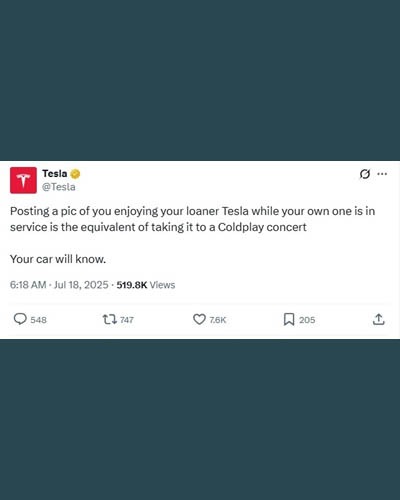
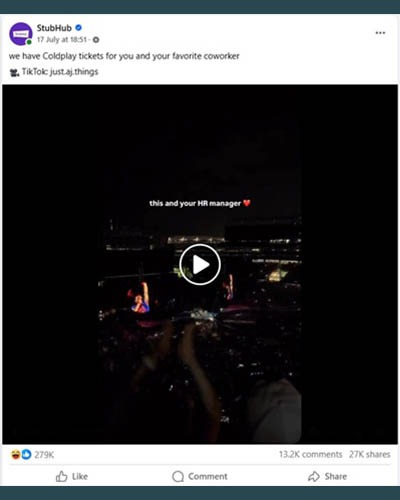
It didn’t take long for brands to jump in and take advantage of what’s known as the “attention economy.” This is when businesses use a viral moment that everyone’s talking about to boost their visibility and show up in search and social feeds. Most of the time, it’s done with a witty or edgy comment that gets people saying, “Did you see what that brand posted?”

Ikea post about the coldplay concert kiss cam

IKEA Instagram

Tesla post about the coldplay concert kiss cam
Stubhub post about the coldplay concert kiss cam

StubHub Facebook

Brands should be thoughtful about the types of viral moments they choose to engage with. As long as they steer clear of political or highly sensitive topics, the benefits often outweigh the risks. A clever response can lead to viral engagement, increased visibility, and stronger audience connection. Many millennials and even some baby boomers tend to appreciate the humor behind these timely posts. But not everyone feels the same way. Some viewers don’t see the moment as newsworthy, and quick-witted brands can come across as tone deaf, especially when real people are affected and the situation involves personal consequences like resignations and family fallout.

What Brands Can Learn

Act fast but thoughtfully
In the world of viral content, timing is everything. The brands that successfully leveraged the kiss cam scandal moved quickly, posting within hours while the moment was still fresh and buzzing online. That kind of speed is essential in today’s “meme-time” cycle, where trends come and go in a matter of days—or even hours. But fast doesn’t mean reckless. Before hitting publish, it’s important to pause and consider the context, the tone, and the potential reaction. A smart, well-timed post can boost visibility. A rushed, careless one can backfire.

Know your brand tone
Humor works when it’s playful, punny, or a little cheeky. But it needs to land well. Brands should avoid coming across as mean-spirited, exploitative, or overly personal. It’s a delicate balance. If your post feels like it’s making fun of real people in a painful situation, it could leave a bad impression. The best-performing posts are the ones that join the conversation without crossing the line.

Alight with your brand voice
Not every brand should sound the same. Tesla’s bold, edgy voice made their response feel natural and on-brand. IKEA leaned into its quirky and cozy image with a lighthearted visual. These brands know who they are, and their messaging reflects that. On the other hand, if a financial institution or healthcare company tried the same tone, it might come off as confusing or even inappropriate. Consistency is key. When your content feels true to your brand identity, it builds trust and connection.

Monitor Audience Response
Engagement is what brands want, but don’t forget to read the room. Track how your audience responds in real time. If your post gets laughs, likes, and shares, that’s a good sign. But if the tone shifts and people start expressing discomfort or empathy for those involved in the original incident, it’s time to reassess. A single post probably won’t define your brand, but how you respond to feedback will. Being willing to pivot or pull back shows that your brand listens and cares.

Takeaways From Attention Economy

These takeaways are a reminder that when done right, reactive marketing can be a powerful tool for brand growth and audience connection. It allows businesses to step into conversations their audiences are already having, creating moments that feel fresh, relevant, and human. When a brand reacts with the right timing, it shows they’re paying attention, not just to trends, but to the world around them.

Reactive marketing isn’t just about being first. It’s about being thoughtful. The most successful examples strike a careful balance between speed, tone, and authenticity. A well-crafted post can spark conversation, make people laugh, or even position a brand as culturally aware and in-touch. But if it feels forced, off-brand, or insensitive, it can just as easily damage credibility.

Ultimately, the goal isn’t just to go viral, it’s to connect. When brands understand their voice, respect their audience, and respond with intention, reactive marketing becomes more than just a moment. It becomes a meaningful part of their broader storytelling strategy.

Thank you for reading this weeks blog! This viral moment reminds me about the blog we wrote about Super Bowl Marketing. Every year brands push the envelope to grab viewers attention to make themselves viral. If you have not read it, check it out! Have a blessed week!

Business Tone and The Message It Gives

Business Tone and The Message It Gives

“Mayhem” from Allstate Insurance

When it comes to branding, your business tone is just as important as your logo or color palette. It’s the personality behind your message, the way your business “sounds” when people read your website, scroll your social posts, or open your emails. Whether you’re just starting out or refining your marketing strategy, defining the right tone can help you connect with your audience and stand out in a crowded market.

Not sure what tone fits your brand best? Let’s explore nine of the most common business tones and how they shape customer perception.

Professional Tone

Polished. Precise. Dependable.

This tone is common in industries where trust and expertise are key. Businesses such as finance, law, healthcare, or B2B services typically carry this tone. It avoids slang or overly casual language, instead focusing on clarity, courtesy, and credibility.

Example Of this Type of Business Tone
The Citi Never Sleeps” – Citibank

Friendly Tone

Warm. Approachable. Human.

The friendly tone makes your audience feel like they’re chatting with a helpful neighbor. It’s perfect for small businesses, hospitality, customer service, and any brand that wants to feel welcoming and personal.

Example Of this Type of Business Tone
Betcha can’t eat just one!” – Lay’s

hand reaching into bag grabbing a potato chip

Authoritative Tone

Trustworthy. Confident. Experienced.

This tone positions your business as a leader in its field. It uses fact-based language and a steady voice that reassures customers they’re in good hands. Think of it as your brand’s way of saying, “We know what we’re doing.”

Example Of this Type of Business Tone
With a name like Smucker’s, it has to be good” – Smucker’s

Playful Tone

Fun. Creative. Unpredictable.

Playful brands don’t take themselves too seriously. They use humor, puns, or quirky language to engage customers and spark delight. This tone is great for lifestyle brands, entertainment, food and beverage, or products with a younger demographic.

Example Of this Type of Business Tone
Snap! Crackle! Pop!” – Rice Krispies

Inspirational Tone

Uplifting. Aspirational. Purposeful.

If your brand is built around a mission or a movement, this tone helps you connect emotionally with your audience. You’ll often see it used by nonprofits, wellness brands, or businesses focused on transformation and growth.

Example Of this Type of Business Tone
Motivation That Moves You” – Peloton

stationary bike with a a black and blue background

Casual Tone

Relaxed. Conversational. No Pressure.

This tone keeps things simple and real. It doesn’t try too hard, and that’s exactly what makes it effective. It’s like talking to a friend. No buzzwords, no fluff, just plain speak.

Example Of this Type of Business Tone
I’m Lovin’ It” – McDonalds

Luxury Tone

Elegant. Sophisticated. Deliberate.

This tone speaks to quality, exclusivity, and attention to detail. It’s used by high-end brands that want to evoke a sense of prestige or timelessness, especially in industries like fashion, design, or hospitality.

Example Of this Type of Business Tone
Reach For The Stars” – Coco Chanel

Bold/Edgy Tone

Fearless. Direct. Disruptive.

Bold brands aren’t afraid to take risks or speak their minds. This tone often challenges the status quo and appeals to customers who crave something different. You’ll find it in startups, challenger brands, or industries that thrive on innovation.

Example Of this Type of Business Tone
The Best or Nothing” – Mercedes Benz

Mercedes-Benz sports car

Empathetic Tone

Gentle. Supportive. Understanding.

This tone shines in industries where emotions run high such as healthcare, mental wellness, or personal services. It puts the customer’s feelings first, showing care, patience, and respect.

Example
Healing Healthcare Together” – United Healthcare

What Tone Is Right For You?

The best brand voices aren’t rigid, they’re flexible and rooted in authenticity. Many successful businesses blend tones depending on the platform or context. For example, your website might be professional, your Instagram playful, and your customer emails friendly with a touch of empathy.

Start by thinking about your audience. What do they need to feel from your brand? Do you want them reassured, excitement, empowered, or understood? Once you know that, your tone becomes your guide for every word you write.

If you’re not sure where to start, that’s where branding experts come in. At Creative Fox, we help develop the right business tone and messaging strategies that feel natural and work across platforms. Whether you’re building a brand from scratch or refreshing your voice, we can help you sound like you—only clearer and more consistent.

3 Ways to Help Prevent Facebook Messenger Scams

3 Ways to Help Prevent Facebook Messenger Scams

If you manage a business or admin page on Facebook, you’ve likely seen an increase in scam messages. Recently, scammers have been targeting every business page, sending fake warnings that appear to be from Facebook or Meta. These messages often claim your page violated community standards or is at risk of being shut down unless you take immediate action. Their goal? To trick you into clicking a malicious link, providing login details, or granting access to your account.

But don’t worry—there are ways to protect yourself and your business from these scams. Here are three simple steps to help prevent Facebook scams and keep your page secure.

1. Be Wary of Urgent or Threatening Messages

Scammers rely on panic to get you to act without thinking. If you receive a message stating your page is at risk, take a deep breath and don’t click any links. They often create a sense of urgency by saying your account will be permanently disabled within a short timeframe unless you take immediate action. This pressure is designed to make you act impulsively before you have a chance to verify the claim.

Here’s how to spot a scam:
  • Check the wording. Scammers may also use exaggerated threats like “your account will be deleted in 24 hours” or “immediate action required.” 
  • Look at the sender. Official Facebook notifications won’t come from random personal accounts or profiles with strange names. Facebook messages about account issues typically come from verified sources or appear in your Business Support Inbox.
  • Pay attention to the link. Hover over any link before clicking. If the website doesn’t include facebook.com, it’s fake. Scammers often use slight misspellings like “faceboook.com” or “fb-security-alerts.com” to trick users.
What to do instead: If you’re unsure whether the message is real, go to your Facebook Business Support Inbox and check for official notifications.
Spam messages sent through Facebook Messenger to avoid

2. Verify Messages Before Taking Action

This photo shows a sample of a Fraudulent Facebook Message

If a message claims to be from Facebook, take a moment to verify its legitimacy before responding. Scammers often create fake pages or use compromised accounts to send fraudulent messages, making them look authentic. To avoid falling victim to these tactics, always take a few steps to confirm the message is genuine.

  • Visit Facebook directly. Instead of clicking a link in the message, open Facebook in a new tab and check for any alerts.
  • Use Facebook’s official Help Center. Go to Facebook Help to see if there are real issues with your page.
  • Check for inconsistencies. Fake messages may have subtle errors, like an incorrect business name, odd formatting, or a sender email that doesn’t match official Meta accounts.
  • Look for verification badges. Official Facebook pages, including those for Meta support, will have a blue verification checkmark next to their name.
  • Ask an expert. Creative Fox Group provides this service to its clients, offering expert advice and security guidance to prevent potential scams and protect business pages. If you already work with a digital marketing team or IT professional, consult them before taking any action. A second opinion can often catch scams before they cause damage.
If you ever receive a message urging you to act immediately, stop and follow these verification steps first. Taking a few extra moments to confirm authenticity can protect your account from hackers and phishing attempts.

3. Restrict Who Can View Your Page

Many scammers operate from outside the United States, so one way to reduce scam messages is by limiting which countries can view your page. Restricting access to only certain regions can prevent scammers from easily finding and targeting your business.

How to change your country settings:

On Desktop:

  1. Go to Facebook Page Settings
  2. Scroll to Country Restrictions
  3. Click Edit
  4. Type in allowed countries (e.g., United States)
  5. Select “Show only to certain countries”
  6. Click Save

On Mobile:

  1. Open the Facebook App
  2. Tap your profile photo at the bottom right to access the menu
  3. Tap the gear icon in the top right to open Settings
  4. In the search bar, type “Country Restrictions” and select it
  5. Tap View
  6. Tap Restriction Type and select “Show only to certain countries”
  7. Tap the back arrow
  8. Tap Countries, then type in the allowed countries (e.g., United States)
  9. Tap Back to save the settings
💡 Additional benefits of restricting page access:
  • It helps reduce spam messages from foreign scam operations.
  • It can improve engagement by focusing on relevant audiences within your region.
  • It prevents unnecessary exposure to fake accounts and bots that attempt to scam business owners.
Facebook settings to help prevent fraud by changing what country can see it

While this won’t eliminate all scams, it can significantly reduce the number of fraudulent messages you receive. Combining this strategy with regular account monitoring and scam awareness will make it much harder for scammers to target your page.

How Creative Fox Group Can Help

Scammers are always evolving, but by staying vigilant and following these three simple steps, you can keep your business page secure. If you ever receive a suspicious message, remember: don’t panic, don’t click, and always verify.

At Creative Fox Group, we help businesses not only with security but also with social media marketing and growth strategies. Whether you need account protection, engagement strategies, content creation, or ad management, our team provides tailored solutions to help your business thrive online. Have you encountered Facebook scams before? Share your experience in the comments to help others stay informed! If you need assistance managing or securing your social media, reach out to Creative Fox Group today!
5 Ways to Improve Your Church’s Marketing

5 Ways to Improve Your Church’s Marketing

Since COVID, the way Americans search for a home church has evolved significantly. Recent data shows that nearly 65% of potential churchgoers now watch an online sermon or research churches online before visiting in person. With this digital shift, it’s common to hear church leaders asking, “How do you attract people to church?” or “How do I market my church?” In this post, we’ll explore modern, friendly digital strategies that help your ministry connect with today’s online audience while keeping the warm, inviting spirit of your church community.

1. Establish a Strong Digital Presence

Your website is the digital front door to your church, and it’s essential that it makes a great first impression. Modernizing your site with the latest UI/UX best practices ensures that potential visitors can navigate effortlessly and find what they’re looking for. Here’s what to focus on:

  • Modern, User-Friendly Design: Update your website to have a clean, contemporary look that follows the latest UI/UX trends. This creates a welcoming environment that invites exploration.
A person looking at service times of a local Winter Haven, FL church on their phone.
  • Easy Navigation: Make sure visitors can quickly locate important information. Whether it’s child care, bible studies, worship services, or other offerings, the details should be easily accessible and well-organized.
  • Mobile Optimization: Ensure your site works seamlessly on all devices so that whether someone is browsing on their phone or computer, they have a smooth experience.

2. Connect with Your Target Audience

The heart of effective church marketing is showing potential members that your church is a place where they belong. Focus on connecting with your target audience by highlighting the fun activities and programs you offer. This way, they can see that there’s a warm and welcoming place just for them:

  • Highlight Activities: Regularly update your website and social media with information about youth groups, community classes, special events, and volunteer opportunities.
  • Visual Storytelling: Use engaging photos, graphics and videos that capture the energy and friendliness of your events. A lively visual story can be the perfect invitation for someone curious about your church.
  • Personal Touch: Feature testimonials and stories from current members. When people hear genuine experiences about how your church has made a difference in someone’s life, they’re more likely to feel drawn to join.

    3. Get Found Online with SEO

    Open laptop on table showing Google Analytics on screen

    In today’s digital world, being easily found online is essential for drawing new members to your church. Studies suggest that nearly 70% of local service searches are performed on search engines. This means a significant number of people are looking for a church near them online. By prioritizing SEO best practices, you can ensure your ministry appears at the top of search results when someone types “church near me” or similar queries:

    • Local Keyword Optimization: Tailor your website’s content with specific keywords (e.g., “church near me,” “local worship services,” “child care and bible studies”) to boost your visibility.
    • Consistent NAP Information: Ensure your church’s Name, Address, and Phone Number are accurate and updated across all online directories.
    • Encourage Reviews: Positive online reviews help improve your search ranking and build trust with potential new members.

    4. Leverage Social Media Platforms

    Social media is where your community is already interacting. By using platforms like Facebook, Instagram, and YouTube, you can share your church’s message and showcase its personality:

    • Engaging Content: Post photos, videos, and live streams of sermons, community events, and volunteer activities. These posts help humanize your church and build connection.
    • Interactive Posts: Encourage engagement through posts and sermon highlights. Remember to create posts that follow the SCARF framework to maximize engagement. 
    • Join Local Facebook Groups: Interact regularly in neighborhood or community groups and don’t just post updates or event announcements about your church, you need to be joining conversations and sharing insights.

    5. Engage in Your Community

    Marketing isn’t just about online presence—it’s also about making real-world connections. Building relationships within your local community can significantly boost your outreach:

    • Participate in Local Events: Join neighborhood events like your local market, and consider hosting your own community events such as back-to-school fairs, fall festivals, or other local outreach activities. These events provide an excellent opportunity to demonstrate your church’s commitment to the community while offering a taste of the vibrant, supportive environment you provide.

    Serving food at the mission to those in need.

    • Highlight Collaborations: Make sure to feature these events on your website and social media pages. Share details about upcoming events and, just as importantly, post about the outcomes after they occur. Pre-event posts can build excitement, while post-event updates, including photos, testimonials, and success metrics to showcase the tangible impact of your outreach efforts.

    Final Thoughts

    Modern church marketing blends timeless community values with innovative digital strategies. By establishing a strong online presence, leveraging social media, creating compelling content, engaging in local outreach, and connecting directly with your target audience, you can effectively answer the pressing questions of “how do you attract people to church?” and “how do I market my church?”

    If you need help implementing these strategies, Creative Fox Group is here to support your journey. Ready to take your church’s marketing to the next level? Schedule a free consultation.

    How Presidents’ Day Became One of Retail’s Biggest Sales Events

    How Presidents’ Day Became One of Retail’s Biggest Sales Events

    When you think of Presidents’ Day, do you picture George Washington and Abraham Lincoln… or a furniture store commercial shouting about once-a-year savings? If it’s the latter, you’re not alone. Over the years, this once solemn holiday has turned into a retail goldmine and not by accident.

    Let’s rewind a bit. Presidents’ Day originally began as a celebration of George Washington’s birthday on February 22nd. It became an official federal holiday in 1879 and was later expanded to all federal offices in 1885. For decades, it remained a day to honor the nation’s first president, but in 1968, things took a turn.

    Enter the Uniform Monday Holiday Act. Congress’s way of giving people more three-day weekends (because let’s be real, who doesn’t love a long weekend?). Signed into law by President Richard Nixon in 1971, this act moved Washington’s Birthday to the third Monday of February and, over time, morphed into what we now call Presidents’ Day. While it was still meant to recognize Washington (and informally, Lincoln), retailers saw an opportunity—and they ran with it.

    President Washington and President Lincoln and the brief history behind president's day

    The Shift: When Presidents’ Day Became a Sales Extravaganza

    Retailers started heavily marketing Presidents’ Day sales in the 1980s, realizing that this mid-winter holiday created the perfect storm for consumer spending. It wasn’t just another long weekend. It was a strategic marketing opportunity for businesses to clear out inventory, tap into consumer spending habits, and boost first-quarter sales.

    Here’s why Presidents’ Day sales became such a big deal (and still are today):

    Items for sale on president's day. Shoes, cars, and stoves.

    1. Seasonal Transition
    Mid-February marks the shift between winter and spring, meaning retailers need to clear out cold-weather stock to make room for new seasonal arrivals. Heavy discounts on winter coats, boots, and holiday leftovers make it the perfect time for clearance events before fresh spring collections hit the shelves.

    2. Consumer Buying Behavior
    Timing is everything. By February and early March, tax refunds start rolling in, meaning many consumers have a little extra cash in their pockets. This makes

    them more likely to splurge on big-ticket items like furniture, cars, and appliances, which are items frequently featured in Presidents’ Day deals. Smart brands capitalize on this “refund effect” by offering limited-time discounts that feel too good to pass up.

    3. Competitive Retail Strategy
    Presidents’ Day is the first major sales event after the holiday season, which makes it a crucial time for retailers to boost their post-holiday sales slump. Since it’s not a gift-giving holiday like Christmas, the competition shifts from “buying for others” to “buying for yourself.” To stand out, businesses roll out aggressive promotions, doorbuster deals, and online-only discounts to grab attention and drive traffic.

    Marketing 101: Why Timing (and Strategy) Matter

    Presidents’ Day isn’t just a random shopping spree, it’s actually a masterclass in strategic marketing. The reason brands invest heavily in these sales is because they understand the power of timing, consumer psychology, and competitive positioning.

    Think about it: If stores randomly slashed prices in February, it wouldn’t have the same impact. But by tying discounts to a national holiday, reinforcing urgency with limited-time deals, and aligning promotions with consumer spending patterns, retailers turn Presidents’ Day into a high-revenue event.

    The takeaway? Good marketing is all about knowing your audience, understanding when they’re ready to buy, and creating the right messaging to drive action. Whether you’re selling mattresses, cars, or digital services, timing + strategy = success.

    So, next time you see a Presidents’ Day sale ad, remember—you’re not just witnessing a discount. You’re seeing a decades-old marketing play in action.